



|
INAR - Institute for Atmospheric and Earth System Research INAR Initiatives Large scale research projects Finnish Center of Excellence Research Infrastructures SMEAR stations International Collaboration IIASA National Collaboration Education Univ. of Helsinki DP in Atmospheric Sci. |
PREPARATORY PHASE COMMITTEE
| Academy Prof. Markku Kulmala Univ.Helsinki , Finland | 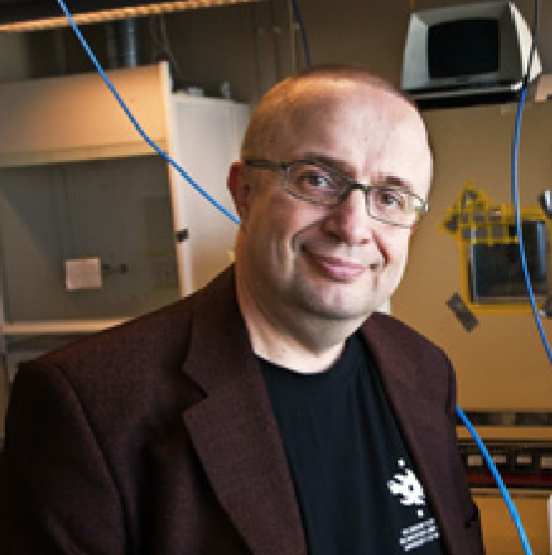 |
| Prof. Sergej Zilitinkevich FMI, Finland |  |
| Director Yrjö Viisanen FMI, Finland |  |
| Prof. Vladimir Kotlyakov Inst. of Geography, Russia | 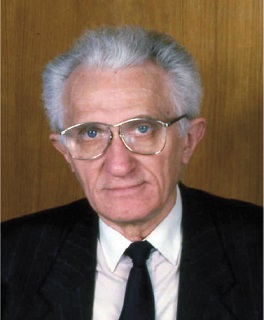 |
| Prof. Nikolay Kasimov Moscow State University, Russia | 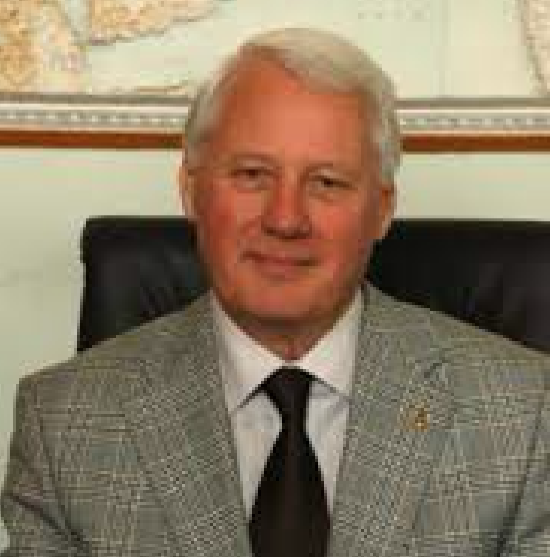 |
| Prof. Valeriy Bondur AEROCOSMOS, Russia | 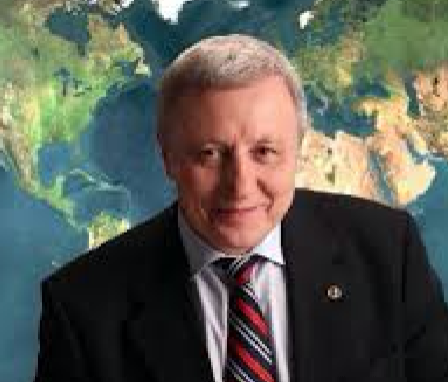 |
| Prof. Gennady Matvienko Inst. of Atmospheric Optics SB RAS, Russia |  |
| Prof. Guo Huadong, Center for Earth Observation and Digital Earth, CAS, Beijing, China |  |
| Prof. Li Chongyin, Institute of Atmospheric physics, CAS, Beijing, China |  |
| Prof. Alexander Baklanov, World Meteorological Organization |  |
| Prof. Pavel Kabat, Director General, IIASA | 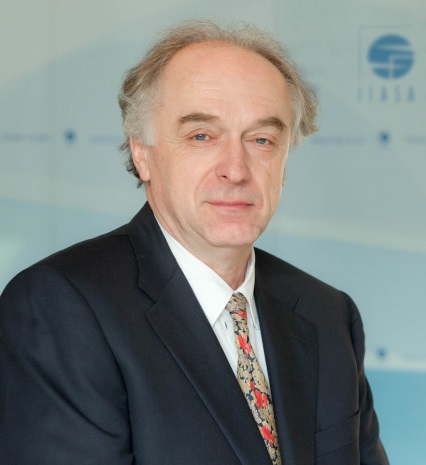 |
| Prof. Hans-Christen Hansson Stockhol University, Sweden |  |
Integrated Arctic Observation System (INATROS)
Scope: The overall objective of INATROS is to build an efficient integrated Arctic Observation System (iAOS) by extending, improving and unifying existing systems in the different regions of the Arctic.
Duration of Project: 2016-2021
Project coordinator & contact information:
Stein Sandven
- Tel.: +47 993 68 440
Hanne Sagan
- Tel.: +47 453 93 2013 93 201
Project partners:
- The Nansen Environmental and Remote Sensing Center (NERSC)
- The University of Bergen (UiB)
- Institute of Marine Research (IMR)
- Meteorological Institute of Stockholm University (MISU)
- Alfred Wegner Institute (AWI)
- The Institute of Oceanology - Polish Academy of Sciences (IOPAN)
- The Technical University of Denmark (DTU)
- Aarhus University (AU)
- The Geological Survey of Denmark and Greenland (GEUS)
- The Finnish Meteorological Institute (FMI)
- The University Centre in Svalbard (UNIS)
- The Nordisk Fond for Miljø og Udvikling (NORDECO)
- Swedish Meteorological and Hydrological Institute (SMHI)
- The University of Sheffield (USFD)
- National University of Ireland Maynooth (NUIM)
- French Research Institute for the Exploitation of the Sea (IFREMER)
- The Max-Planck-Institute for Biogeochemistry (MPI-BGC)
- European Global Ocean Observing System (EuroGOOS)
- The European Centre for information on Marine Science and Technology (EurOcean)
- The Technical University of Madrid (UPM)
- University of Bremen (UB)
- University of Hamburg (UHAM)
- Northern Research Institute (NORUT), Terradue,
- The Greenland Institute of Natural Resources (GINR)
- University of Exeter (UOE), The Norwegian Institute for Water Research (NIVA)
- The National Centre for Scientific Research (CNRS)
- University of Helsinki (UHel), German Research Center for Geosciences (GFZ)
- Association for Research and Development of Industrial Methods and Processes (ARMINE)
- The Institute of Geophysics - Polish Academy of Sciences (IGPAN), University of Silesia (U SLASKI)
- The Barcelona Supercomputing Center (BSC)
- The Norwegian Veritas GL (DNV GL)
- All-Russian Research Institute Of Hydrometeorological Information-World Data Centre (RIHMI)
- The Nansen International Environmental and Remote Sensing Centre (NIERSC)
- Woods Hole Oceanographic Institution (WHOI)
- Scripps Institution of Oceanography (SIO)
- University of Alaska (UAF)
- Jet Propulsion Laboratory (JPL)
- University of Laval (U Laval)
- University of Victoria (UVIC)
- National Marine Environmental Forecasting Center (NMEFC)
- Polar Research Institute of China (PRIC)
- Instiute of Remote Sensing and Digital Earth – Chinese Academy of Science (RADI)
- National Institute of Polar Research (NIPR),
- Korea Ocean Research and Development Institute (KOPRI)
Funding:
Other Information: http://www.intaros.eu/
AEROCOSMOS-ATM
Scope: Enhancing and strengthening of cooperation between ISR “AEROCOSMOS” and University of Helsinki, Division of Atmospheric Sciences in the area of development of new and implementation of existing innovative satellite and ground-based methods and technologies for the purpose of studying of observed and projected changes in Northern Eurasia by combining efforts of Russian Federation and EU Member States. The objective is to be achieved by mutually beneficial integration of scientific and innovative capacities of the Parties.
Activities: Development of methods for monitoring of the dynamics of natural and anthropogenic emissions of trace gases and aerosols in the atmosphere based on satellite data and modeling result.
Duration of the project: 2020
Project coordinator & contact information:
V.G.Bondur
- Email: This email address is being protected from spambots. You need JavaScript enabled to view it.
- Tel: 84956321654
Academician Markku Kulmala, University of Helsinki, Division of Atmospheric Sciences.
- Email: markku.kulmala@helsinki.fi
- Tel: +358-9-19150 756
Project Partners:
- University of Helsinki, Division of Atmospheric Sciences (Finland)
- Institute for Scientific Research of Aerospace Monitoring “AEROCOSMOS” (Russia)
Funding: Partrly funded by the Ministry of Education and Science of the Russian Federation (“Research and development on priority directions of scientific and technological complex of Russia for 2014-2020) and by the Academy of Finland (The Finnish Center of Excellence in Atmospheric Science – From Molecular and Biological Processes to the Global Climate).
TRAnsferable Knowledge and Technologies for high-resolution environmental impact assessment and management (TRAKT-2018)
Scope: The majority of Nordic population is residing in complex urban environment. The concentrated emission of air pollutants, anthropogenic landscape and local climate modifications are lasting and have distant, often transboundary impact. The holistic task of the science-based environmental management, urban planning and climate change adaption requires increasingly accurate quantitative information, which is provided timely and at the user-relevant scales. This project is sought as indispensable step towards implementation of such an integrated information resource. Key elements of the proposed innovative technology have been already tried and they are in line with the general trend of model resolution and sophistication refinements, but distinct and advantageous in the way it approaches the observations and the turbulence mixing. The project will integrate citizen observations, remote sensing products and turbulence-resolving urban modeling with the regional climate downscaling and climate change scenarios.
Activities: to enabling a customer-target climate services and to implement the approach in the concrete demonstration case of Apatity-Kirovsk region (Murmansk Oblast) of Russia.
The preparation work; including the starting workshop, applied end-user seminars and data collection, will serve to set the demonstration case in the most relevant way. The follow-up work will inform the potential industrial customers, authorities and larger Pan-Eurasian Experiment PEEX research community about the new approach, technological solutions and achievements. Using the connections with the Universities and research organizations in Norway, Finland, and Russia as well as the educational bases at Kola Peninsula, the project includes also an essential educational component. Students will be involved at all project stages as well as in the core field and modeling work. The project will support the participation of students and young researchers in the PEEX activity, Russian and Scandinavian summer schools and selected courses in applied climatology.
Expected project results: contributing to the work towards new climate standards for high latitude regions. Presently, such standards for construction, urban management, infrastructure maintenance and operation do not include the local climate diversity aspects as well as the state-of-the-art understanding of the turbulent processes in the cold climates and climate change scenarios.
Duration of the project: 2018
Project coordinator & contact information:
Dr. Igor Esau, Nansen Environmental and Remote Sensing Center (NERSC, Bergen, Norway)
- E-mail: This email address is being protected from spambots. You need JavaScript enabled to view it.
- Phone: +47 473 99 690
- https://www.nersc.no/staff/igor-ezau
Project partners:
- NERSC - Nansen Environmental and Remote Sensing Center (Bergen, Norway)
- UHEL - University of Helsinki, Department of Physics, Division of Atmospheric Sciences (Helsinki, Finland);
- NIERSC - Nansen International Environmental and Remote Sensing Centre (St.Petersburg, Russia);
- KSC - Kola Science Center, Russian Academy of Science (Apatity, Murmansk region, Russia);
- SRCES - Science Research Center for Ecological Safety, , Russian Academy of Science (St. Petersburg, Russia);
Funding: "Programme for Environment and Climate Co-operation (PECC) – Nordic pilot programme for co-operation projects in North-West Russia" funded by the NMC (Nordic Council of Ministers) & administered by the NEFCO (Nordic Environment Finance Corporation)
Project report: 2nd period reporting for the TRAKT-2018 project. INAR-UHEL 3rd period reporting. INAR-UHEL 4th period reporting. INAR-UHEL final reporting (with contributions from all periods)
More information and results of the TRAKT project are available at the official website.